
Written by Lori Bumbaco, MS, RDN, CSO, LDN, Oncology Dietitian
Fire up the grill with health in mind!
Summertime often means enjoying more food cooked on the grill or barbecue. As we fire up the grill, it is an important opportunity to learn that grilling meat at high temperatures can produce potential cancer-causing compounds. A recent survey found that only 20 percent of Americans reported being aware of the link between grilled meats and cancer. Grilling meat, poultry or fish with intense heat or open flames can lead to formation of potential carcinogens called polycyclic aromatic hydrocarbons (PAHs) and heterocyclic amines (HCAs).
Polycyclic aromatic hydrocarbons occur when fat and juices from meat drip onto flames, producing smoke that deposits on the surfaces of food. PAHs can occur in meat, poultry, and fish. Heterocyclic amines form when muscle proteins in meat, poultry, and fish react with high heat. Specifically, HCAs are created when amino acids, sugars, and creatine or creatinine, react at high temperatures.
Research shows that both HCAs and PAHs can cause changes in DNA that may lead to cancer. While more research is needed to directly link grilled meat to cancer in humans, the presence of these carcinogens is enough to raise concern. Another important point to make is that over-consuming red meat and processed meat, whether grilled or not, may increase the risk for colorectal cancer. Experts recommend limiting red meat to less than 12-18 oz. cooked per week, while limiting processed meat as much as possible.
The good news is that we can still enjoy grilled food and minimize the creation of carcinogens by following a few simple steps. If we marinate, pre-cook, cook with lower flames, use smaller portions, and enjoy fruits, vegetables, and plant proteins on the grill, we can help ourselves.
Marinating means soaking your meat in a liquid sauce before you cook it. Studies show that marinating meat, poultry, or fish for at least 30 minutes can significantly reduce the formation of HCAs. Antioxidants in herbs and spices, like rosemary, garlic, and turmeric, may stop HCAs from forming. Acidic ingredients like vinegar, wine, or citrus juice may alter the pH of the meat, which reduces the formation of both HCAs and PAHs. Lastly, the marinade may act like a barrier to shielding meat from intense heat.
Pre-cooking meat either in the microwave, stovetop, or oven before transferring to the grill reduces the amount of PAHs because the meat is exposed for less time to smoke. Pre-cooking meat may also help reduce the risk of foodborne illness from undercooked meat.
Grilling over a lower flame helps to prevent charring and flare-ups. High flames and burnt bits are sources of HCAs and PAHs. We can simply reduce charring and flare-ups by trimming visible fat from meat, moving coals to the side and cooking in the center, flipping meat frequently to avoid burning, and cutting away charred parts before serving.
A smart approach to eating less is to cut meat into smaller pieces, which cook faster and reduce the time spent being exposed to high heat. Consider making kebabs or skewers which combine meat, poultry, or shellfish with colorful fruits and vegetables. Salmon kebabs with cherry tomatoes and bell peppers, or chicken skewers with zucchini and mushrooms add variety and nutrition!
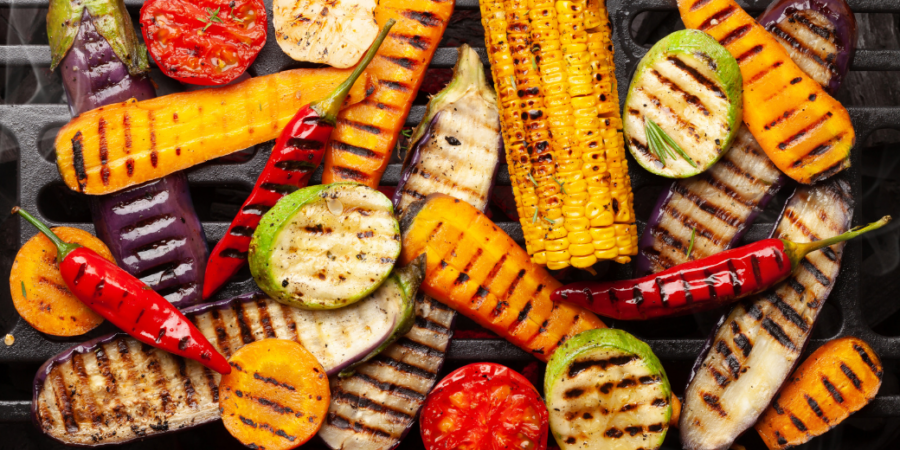
Did you know that grilling fruits and vegetables does not create HCAs? Plant foods provide fiber, vitamins, and phytochemicals which automatically offer cancer protection. Some ideal candidates for the grill include asparagus, mushrooms, eggplant, zucchini, bell peppers, corn, onions, pineapple, peaches, mangos, and watermelon.
Gilling is a summertime tradition that does not need to be avoided because of concerns about carcinogens. It is possible to reduce exposure to concerning compounds through one or more simple strategies. Not only will following these tips for healthier grilling make food cancer-protective but also will satisfy the desire for grilled meals!