
Written by Lori Bumbaco, MS, RDN, CSO, LDN, Oncology Dietitian
Food Safety Basics During Cancer Treatment
About 1 in 6 Americans gets sick from a foodborne illness each year. Anyone can get sick, but cancer and cancer treatment can weaken the immune system and increase risk. For that reason, it is important to follow simple steps that will lower your risk.
Symptoms to Watch For
Symptoms may start within 20 minutes, 1 to 3 days, or even up to 6 weeks after eating contaminated food. They may include vomiting, diarrhea, abdominal pain, fever above 101.3 °F, headache, body aches, and chills.
The Four Core Food Safety Steps
Food safety can lower the risk of foodborne illness. The Partnership for Food Safety Education recommends four simple steps: Clean, Separate, Cook, and Chill.
Clean
Wash hands with warm water and soap for at least 20 seconds before and after handling food. Wash cutting boards, dishes, utensils, and counters with hot, soapy water after preparing each food. Rinse fruits and vegetables under running tap water, even if you plan to peel them.
Separate
Keep raw meat, poultry, seafood, and eggs away from ready-to-eat foods in your cart, bags, refrigerator, and kitchen. Use separate cutting boards for produce and raw animal foods. Store raw meat, poultry, and seafood in sealed containers or bags on the bottom shelf of the refrigerator.
Cook
Cook foods to a safe internal temperature and use a food thermometer to check. Color is not a reliable sign that meat is done. Cook eggs until the yolk and white are firm, and reheat leftovers to 165 °F.
Chill
Keep the refrigerator at 40 °F or below and the freezer at 0 °F or below. Refrigerate or freeze perishable foods as soon as possible. Do not leave perishable foods at room temperature for more than 2 hours, or 1 hour if the temperature is above 90 °F.
To stay well informed about foodborne illness outbreaks and recalls, consider the following resources: Food Safety Recalls and Outbreaks and FDA Recalls.
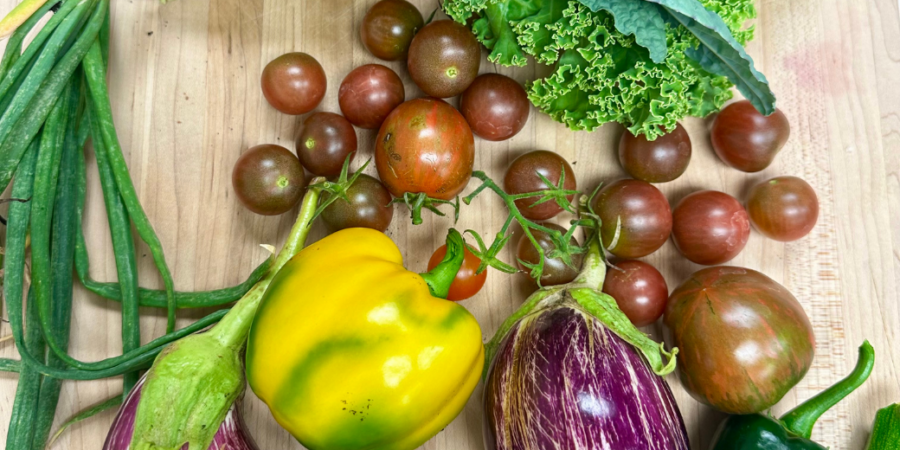
If you are interested in taking advantage of early fall produce, visit your local farmer’s market to enjoy the flavors of the season! While there is no evidence to suggest that produce purchased from a farmer’s market is any safer than those in grocery stores, in theory the shorter supply chain may offer less chance for contamination. Bottom line, no matter where you purchase your food, consider the food safety tips highlighted this month to lower your risk and protect yourself.